
 Türkçe
 Deutsch
 Français
Rhinoplasty is consistently one of the most performed cosmetic surgical procedures worldwide. By 2026, rhinoplasty techniques have reached a level of precision that allows for highly personalised, natural-looking and long-lasting results. Whether you are considering surgery for functional reasons or aesthetic improvements, this comprehensive guide will walk you through everything you need to know. For more information, visit our EFC Clinic Plastic Surgery unit.
What Is Rhinoplasty?
Rhinoplasty is a surgical procedure designed to reshape, resize or reconstruct the nose. Aesthetic rhinoplasty focuses on improving the visual appearance of the nose, while functional rhinoplasty corrects structural issues such as a deviated septum or enlarged turbinates that impair breathing. In many cases, both goals can be addressed simultaneously in a single operation.
Because the nose sits at the very centre of the face, its proportions have a direct impact on overall facial harmony. A successful rhinoplasty therefore goes beyond improving the nose itself — it considers the balance and naturalness of the entire face. EFC Clinic's specialist surgeons create a personalised plan tailored to each patient's unique anatomy.
Surgical Techniques in Rhinoplasty
Open Rhinoplasty
In the open technique, the surgeon makes a small incision across the columella — the strip of tissue between the nostrils — allowing full direct access to the nasal skeleton. This approach is preferred for complex cases, major structural modifications and revision rhinoplasties. Any resulting scar fades to near-invisibility over time.
Closed Rhinoplasty
In the closed technique, all incisions are made inside the nostrils, leaving no external scarring. It requires less tissue dissection, resulting in a shorter recovery period. It is ideal for more limited corrections and delivers excellent results in the hands of an experienced surgeon.
Piezo Rhinoplasty (Ultrasonic)
One of the most advanced techniques of 2026, Piezo rhinoplasty uses ultrasonic vibration to sculpt nasal bones with exceptional precision. Compared to traditional osteotomy tools, it causes significantly less trauma to surrounding tissues, resulting in reduced bruising, less swelling and faster healing. It is particularly superior in cases requiring significant bony reshaping.
Non-Surgical Rhinoplasty
Non-surgical rhinoplasty uses hyaluronic acid filler injections to make subtle refinements such as camouflaging small bumps, slightly lifting the tip or correcting mild asymmetry. Results last 12-18 months and the procedure involves no downtime, making it a temporary alternative for those not ready for surgery.
Step-by-Step: The Rhinoplasty Procedure
Step 1: Consultation and Digital Planning
The foundation of a successful rhinoplasty is a thorough pre-operative assessment. The surgeon analyses facial anatomy, skin thickness, and bone and cartilage structure. 3D digital simulation is used to visualise potential post-operative outcomes, allowing expectations to be set realistically. Contact EFC Clinic to book your free consultation.
Step 2: Anaesthesia
Rhinoplasty is typically performed under general anaesthesia. For minor procedures, a combination of sedation and local anaesthesia may be used. The type of anaesthesia is determined by the scope of the operation and the patient's overall health.
Step 3: Structural Modifications
Depending on the chosen technique, the surgeon reshapes the nasal bones and cartilages, removes excess tissue or adds grafts where additional volume is needed. A deviated septum can be corrected simultaneously. All modifications are made with millimetre-level precision, always keeping overall facial balance in mind.
Step 4: Closure and Splinting
Incisions are closed, internal silicone splints or packing may be placed, and an external protective splint is applied to the nose. The procedure typically takes between 1.5 and 3 hours.
Step 5: Immediate Post-Operative Period
The patient is monitored briefly and discharged once fully recovered from anaesthesia. EFC Clinic's patient services include 24/7 post-operative support throughout the recovery period.
Recovery Timeline
First Week
Swelling and bruising peak within the first 48-72 hours. The head should be kept elevated and bending forward must be avoided. The splint and sutures are removed on days 7-10, after which most patients feel comfortable returning to social activities, though the nose will still appear swollen.
First Month
The majority of swelling subsides within 3-4 weeks. Wearing glasses, sun exposure and contact sports are strictly prohibited during this period. Most patients can return to an office environment by the end of the second week.
Months 6-12
Rhinoplasty requires patience. The subtle residual swelling fully resolves and the cartilage settles into its new position over 6 to 12 months. The true final result emerges at the end of this period. EFC Clinic provides a structured follow-up protocol for all rhinoplasty patients.
Who Is a Good Candidate for Rhinoplasty?
The ideal rhinoplasty candidate typically has the following characteristics:
- Facial growth is complete: Generally age 16-17 for women and 17-18 for men and older.
- Good general health: Clotting disorders and chronic conditions must be evaluated beforehand.
- Realistic expectations: Rhinoplasty aims for natural, proportionate harmony — not perfection.
- Non-smoker or willing to quit: Smoking significantly impairs healing and increases complication risk.
- Psychologically prepared: Understanding that final results may take up to one year to fully appear.
Our specialist surgeons will assess your suitability comprehensively during the consultation.
Why Choose Turkey and EFC Clinic?
Turkey has established itself as a global hub for medical tourism, combining world-class surgical expertise with significantly more competitive pricing than Western Europe or North America.
What EFC Clinic offers:
- Fellowship-trained plastic surgeons
- 3D simulation for pre-operative planning
- Transparent all-inclusive pricing — no hidden fees
- End-to-end patient coordination — from airport transfer to accommodation
- Multilingual patient support team
Explore our plastic surgery unit, browse our full range of treatments, or contact us to begin your personal assessment.
Frequently Asked Questions
Is rhinoplasty permanent?
Yes. Structural changes to bone and cartilage are permanent. Only non-surgical rhinoplasty with filler is temporary, lasting 12-18 months.
Is rhinoplasty painful?
The procedure is performed under general anaesthesia, so no pain is felt during surgery. Post-operative pressure and tension are effectively managed with prescribed pain relief.
How long does the operation take?
Depending on the complexity of the case, rhinoplasty typically takes between 1.5 and 3 hours.
When can I return to normal life?
After splint removal on days 7-10, most patients feel comfortable in social settings. Office work can generally resume by the end of week two.
Is revision rhinoplasty possible?
Yes, but revision surgery should not be planned until at least 12 months after the primary procedure, allowing all tissues to fully settle.
Is rhinoplasty in Turkey safe?
When performed at accredited clinics by experienced plastic surgeons, rhinoplasty in Turkey is safe and meets international standards. EFC Clinic operates in full compliance with international medical protocols.
Ready to take the next step? Contact EFC Clinic for a free consultation, or explore our plastic surgery unit for more information.
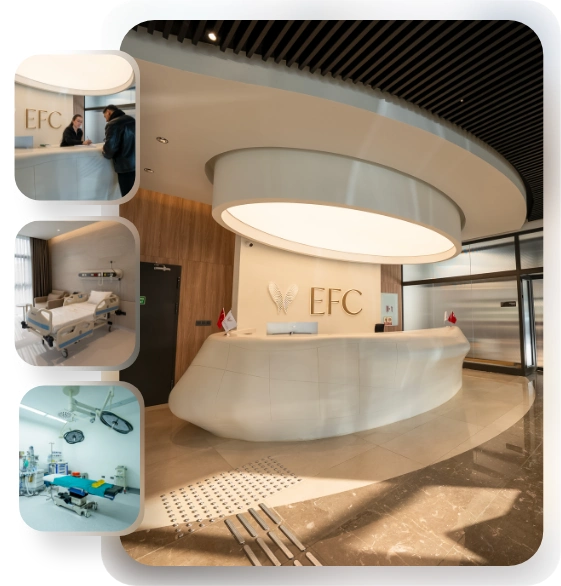
Comprehensive Care: From the First Examination to the Follow-Up Process.
EFC CLINIC is a center of excellence specializing in the most rigorous fields of surgical medicine—from aesthetic surgery to interventional treatments—where every step is carried out with meticulous care. Medical excellence, aesthetic precision, and an uncompromising ethical stance meet on the same line. Our subspecialty-trained specialists aim to achieve natural and reliable results by providing evidence-based care with modern imaging, standardized protocols, and safety systems. From consultation to recovery, your care is coordinated end-to-end with clear communication, transparent planning, and genuine respect for your health.
