
 Türkçe
 Deutsch
 Français
The nose is one of the most defining aesthetic features of the face. A disproportionate shape, a functional problem or a post-trauma deformity can directly affect self-confidence and quality of life. In 2026, rhinoplasty stands among the most technologically advanced surgeries, delivering both aesthetic and functional results in a single procedure. In this comprehensive guide, we cover what rhinoplasty is, who it is suitable for, the difference between open and closed techniques, the recovery timeline and why Turkey has become the world’s leading destination for nose surgery.
What Is Rhinoplasty?
Rhinoplasty is a surgical procedure performed to alter the size, shape, symmetry or function of the nose. It is also known as a nose job or nose reshaping surgery. The procedure involves precise modifications to the nasal bones, cartilage and soft tissue.
Rhinoplasty serves two primary goals:
- Aesthetic rhinoplasty: Aims to improve the visual proportions, symmetry and harmony of the nose with the rest of the face.
- Functional rhinoplasty: Corrects breathing difficulties caused by a deviated septum, turbinate hypertrophy or valve insufficiency.
In many cases both goals are combined in the same session. Learn more about rhinoplasty at EFC Clinic.
Who Is a Candidate?
- Dorsal hump or projection on the nasal bridge
- Wide, narrow or asymmetric nasal tip
- Drooping or upturned nasal tip
- Wide nasal wings (alar flare)
- Breathing difficulty due to a deviated septum
- Post-trauma or post-surgical deformity (revision rhinoplasty)
- Congenital nasal anomalies
The ideal candidate is someone whose nasal development is complete (approximately age 16 for women, 17-18 for men), who is in good general health and has realistic expectations.
Open vs. Closed Rhinoplasty
Open Rhinoplasty
The surgical incision is made across the columella — the narrow strip of skin between the nostrils. This approach provides the surgeon with full direct visualisation of the nasal skeleton and is preferred for complex cases.
- Allows extensive reshaping and correction of asymmetry
- Standard approach for revision rhinoplasty
- A small scar may remain on the columella but becomes nearly invisible over time
Closed Rhinoplasty
All incisions are made inside the nostrils; no external scar is visible. Preferred for less extensive cases.
- No visible external scarring
- Swelling and bruising may be less than with the open technique
- Limited visualisation for complex structural changes
The choice of technique is determined by the nasal anatomy, the extent of changes required and the surgeon’s assessment.
Procedure Steps
- Consultation and Digital Planning: Facial analysis and 3D simulation create a projected post-operative image. Patient expectations are discussed in detail with the surgeon.
- Pre-operative Preparation: Blood thinners are discontinued and smoking cessation at least 2 weeks before surgery is strongly advised. A pre-anaesthetic assessment is conducted.
- Anaesthesia: Rhinoplasty is generally performed under general anaesthesia. Local anaesthesia with sedation may be used for minimal cases.
- Surgery: The nasal bones, cartilage and soft tissue are reshaped according to the chosen technique and planned modifications. The procedure typically takes 1.5-3 hours.
- Closure and Splints: After closure, internal nasal packing and an external protective splint are applied.
- Recovery Start: The patient is monitored at the clinic on the day of surgery; an overnight stay may be required.
Recovery Process
- Weeks 1-2: Bruising and swelling are at their peak. Internal packing is removed at days 2-3 and the external splint at days 7-10. Social activity is not recommended during this period.
- Weeks 3-4: Visible swelling and bruising largely subside; most patients return to work and social life. Glasses and intense exercise should still be avoided.
- Months 3-6: The nose gradually takes its final shape; delicate tissues are still settling.
- Months 12-18: The final result is fully apparent. Cartilage remodelling takes time.
Sleeping with the head elevated, reducing salt intake and using sun protection all help accelerate recovery.
Piezoelectric Rhinoplasty
Piezoelectric rhinoplasty uses ultrasonic vibration energy to precisely reshape bone surfaces instead of traditional chisels and mallets. It works with minimal damage to soft tissues.
- Less bleeding and swelling
- More precise bone shaping
- Faster recovery
- Superior aesthetic outcomes especially in patients with thin nasal skin
EFC Clinic incorporates piezoelectric rhinoplasty into its standard protocol for suitable cases. View all our plastic surgery services.
Why Turkey and EFC Clinic?
Turkey is consistently ranked among the world’s most preferred countries for rhinoplasty. The same quality surgeries can be performed in Turkey at 60-70% lower cost compared to Western Europe and the USA.
- Plastic surgeons with extensive international experience
- Pre-operative digital planning with 3D simulation
- Full expertise in piezoelectric, open and closed techniques
- Patient safety protocols to JCI standards
- Patient coordination in TR / EN / FR / DE
- Transfer, accommodation and remote follow-up support for international patients
Learn about our international patient services or meet our specialist doctors.
Frequently Asked Questions
Is rhinoplasty permanent?
Yes. Surgical changes to bone and cartilage are permanent. However, the natural ageing process continues to affect nasal tissue over time.
Is rhinoplasty painful?
The surgery is performed under general anaesthesia so no pain is felt. A feeling of pressure and fullness in the first few days post-surgery is normal and easily managed with pain relief.
When can I return to work?
Desk workers can generally return after 7-10 days. Physical activity and sport should be avoided for 4-6 weeks.
Is revision rhinoplasty possible?
Yes. Revision rhinoplasty can be performed for those unsatisfied with a previous result. However, at least 12 months must pass after the first surgery.
Can rhinoplasty and septoplasty be combined?
Yes. For patients with a deviated septum, aesthetic rhinoplasty and functional septoplasty can be combined in the same session, which is advantageous both in terms of cost and recovery.
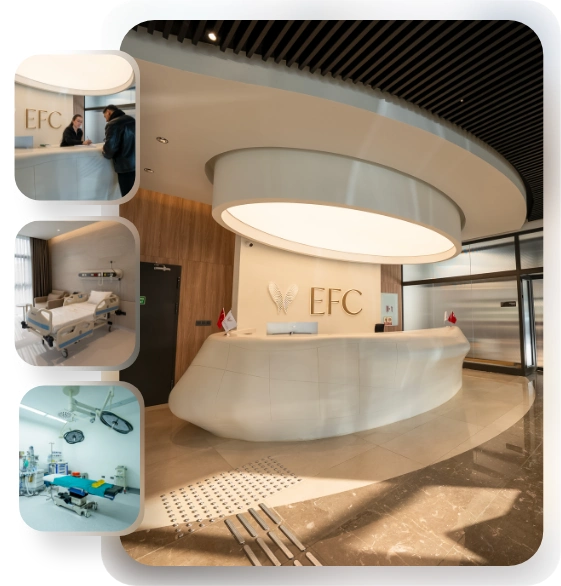
Comprehensive Care: From the First Examination to the Follow-Up Process.
EFC CLINIC is a center of excellence specializing in the most rigorous fields of surgical medicine—from aesthetic surgery to interventional treatments—where every step is carried out with meticulous care. Medical excellence, aesthetic precision, and an uncompromising ethical stance meet on the same line. Our subspecialty-trained specialists aim to achieve natural and reliable results by providing evidence-based care with modern imaging, standardized protocols, and safety systems. From consultation to recovery, your care is coordinated end-to-end with clear communication, transparent planning, and genuine respect for your health.
